
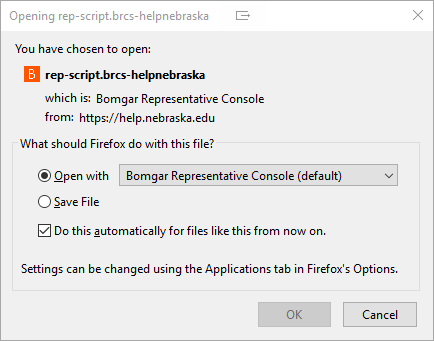
Install the Representative Console. In any web browser, go to the URL of your Secure Remote Access Appliance followed by /login and enter the username and password set by your administrator. You may be prompted to change your password the first time you log in. From the My Account page, download and install the BeyondTrust representative console. The option will default to the appropriate installer for. BeyondTrust Remote Support is remote desktop access, service desk, and collaboration software for Windows, Mac, Linux, iOS (iPad, iPhone), and Android devices. Securely support end users, desktops, and their devices, and access servers and endpoints from anywhere in the world.
- Bomgar Access Console Download
- Bomgar Representative Console Download Mac Installer
- Bomgar Representative Console Download Mac Iso
- Bomgar Representative Console Download Mac Os
- Bomgar Representative Console Download Mac Catalina
This page contains documentation for how to use MIT's BeyondTrust software. It is written for use by support technicians. If you are a BeyondTrust admin looking for documentation, see this article for Admins, or if you are looking for information about the end-user experience when using BeyondTrust, see this article.
On this page:
Download & Install
- Go to MIT's BeyondTrust login page and click 'Use SAML for Authentication.' Do not enter a username and password.
- Once logged in select the appropriate platform, and click on the button labeled Download Representative Console.
- If you are on a Mac, a disk image containing the BeyondTrust software will download to your computer: copy this into your Applications folder. If you're on Windows, an installation wizard will download: run the wizard.
Getting Started
- Once the BeyondTrust application is installed, you can launch it as you would launch any application.
- Once the server and client are in version agreement, you will be able to log in using this window. Be sure to select 'SAML Credentials.'
Connecting to a remote computer
Bomgar Access Console Download
| Lincoln Lab machines cannot be accessed using BeyondTrust. For issues in need of BeyondTrust access, the Lincoln Labs help desk can be reached at 781-981-4357 or help@ll.mit.edu. |
- Once you have launched and logged in to the BeyondTrust Representative Console application you can direct the end user to remotehelp.mit.edu. There they should see a list of screen names, including your own.
- Direct the user to click on your screen name to download and run the end-user application. For more information about what they can expect to see, please refer to the BeyondTrust for End-users article.
- Running the end-user client application initiates a connection to your BeyondTrust client software. BeyondTrust receives this connection, and offers you the client as an entry in your 'Personal' queue. Click on the entry and then click the Accept button, or just double-click on the client's entry in your list.
- Once you accept the connection, BeyondTrust's interface updates to a button that allows you to start the screen sharing session.
- Once you request a screen sharing session, the end user then has to grant you share and control privileges.
- You can now begin your support session.
BeyondTrust options
Session controls
- Annotations - Includes tools for visually highlighting elements of the user's screen, such as a pointer, and simple drawing tools.
- Power Control - Allows for shut down and restart of user's computer. Restart provides for a persistent connection across reboot.
- Special Actions - Allows quick access to commonly used Windows functions, such as Control Panel, Start Menu, and Run...
- Screen shot
- View and window controls
- Elevate privileges (shield icon) - Allows support representative to execute actions at an admin level of access
Troubleshooting
Mac users of the Desktop Remote Support client can sometimes get into a state where their name does not show up in the list of available representatives on the support portal web page. If this happens, try these steps:
- Close/logout of the Desktop Rep Console.
- Delete the following plist and folder:
~/Library/Preferences/com.beyondtrust.Representative Console-remotehelp.mit.edu.plist
~/Library/Application Support/bomgar/bomgar-rep/remotehelp.mit.edu - Restart and then try re-launching the Desktop Console.
Other BeyondTrust issues that cannot be resolved by the Service Desk can be referred to the End User Computing team.
Ending the session
When you and the user are ready to finish, one of you can click the Red X to end the session. Whoever initiates ending the session will be prompted to confirm.
On the remote computer, the BeyondTrust application that was installed will be removed and confirmation of the removal is displayed.
What's the difference between Bomgar and Zoom/Skype?
Bomgar is intended for use by Technical Support Providers. Zoom and other web conferencing tools are designed for a much broader audience, to use for giving presentations to remote audiences, and has a feature set largely geared for that purpose. The feature set differences, and security concerns associated with a cloud service prevent Zoom and friends from being our tools of choice for IT support needs.
Can Bomgar be used off-campus?
Yes. Both the end-user and the TSP can be in any location. Any network connection will work (that is, there is no need for additional security measures, such as VPN).
Who is allowed to use Bomgar to access other computers?
Access to Bomgar is limited to people in designated IT support roles.
Does this mean someone can access my computer whenever they want to?
No. For a typical session, the TSP will contact you to request a Bomgar session. See our Bomgar Basics and Accept a Bomgar Invitation articles for information on how the session is initiated.
How do I request Bomgar-based support?
You should continue to report problems and request assistance the way you always have. The TSP responding to your issue will determine whether Bomgar is an appropriate tool for your situation. They may also decide that responding by email, phone, or an in-person visit is a better approach.
How do I get a Bomgar account?
The Bomgar tools (the Representative Console) are only available for people in designated IT support roles. If you are in such a role, Bomgar provisioning is tied to CornellAD groups associated with colleges and distributed units. Your IT Director makes the determination whether their group uses Bomgar and, if so, who has access. If you are an end user, you do not need a Bomgar account.
What does it mean for me to accept a Bomgar session?
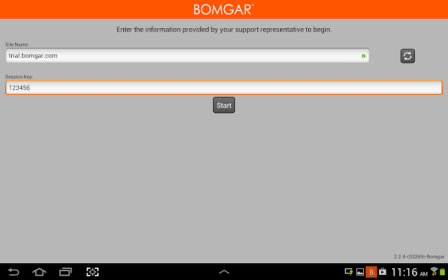
The TSP who initiates the session will be able to see exactly what you see on your screen. They will share control of your mouse pointer, and keyboard. Most often, the TSP will be on the phone with you, or remain in contact with you via a chat window on your screen.
What if I move my mouse or type on my keyboard?
By default, if you use your mouse or keyboard, it overrides the TSP's actions. We recommend that you NOT take any actions unless specifically requested to do so by the TSP. For example, the TSP may open an application that requires you to enter a password. You would then use your keyboard to enter the password. In this example, the TSP would NOT know what you typed.
Can I stop a session?
Yes. You can end the session at any time by clicking STOP SHARING, which appears on your screen during the entire session.
Are my sessions being recorded?
No. While Bomgar has the ability to record video of sessions, this capability is globally disabled at Cornell. A log is automatically kept of any chat activity, along with all requests for access made by the TSP. The log will show, for example, that the TSP asked to share your screen and share control of your mouse, but it will NOT show what applications were opened or the contents of any file, email message, etc. The TSP, his/her supervisor, senior IT management, IT security, and the Audit office have access to this information for quality control, security, and auditing purposes. The log is kept for 90 days.
How is my privacy protected? What is acceptable use of Bomgar?
Policies are in place to protect both the end-user and IT staff against breaches of privacy, and to define the appropriate use of technology. These policies apply to all IT services and activities including remote assistance using Bomgar or any other remote assistance tool.
Applicable policies:

Bomgar Representative Console Download Mac Installer
5.1, Responsible User of IT Resources
5.4.1, Security of IT Resources
5.9, Access to IT Data
Can the TSP access everything on my computer?
No. First, access to anything that requires a password or authentication will not be accessible unless you type in the password. Second, you and the TSP will see the same thing, so if the TSP opens a file that you're not comfortable sharing with them, you can tell them so or end the session yourself.
There are a few instances where the TSP can request information from you computer (for example, system information about your operating system, amount of memory installed, etc.), but they won't have access to that information until you click Allow (in the Bomgar chat window) to grant that specific request.
Because the TSP will be able to see any open documents on your screen, we strongly recommend that, before accepting the session, you close all documents and applications that contain confidential information, or that are not relevant to the issue being resolved.
I'm not sure I'm comfortable with someone being able to see my screen and move my mouse from another location. Is it really necessary?
Necessary? Maybe not, but it's very helpful in reducing costs and improving response time. Remote assistance is a valuable tool for quickly identifying and solving problems. It avoids the need to wait for a TSP to come to your location, or the cumbersome phone calls where you try to describe exactly what you're seeing and the TSP tries to describe exactly the steps they want you to take. Many businesses, organizations, and Ivy League universities are using Bomgar and similar tools.
Bomgar will not be used in support of any type of surveillance activities by IT staff.
Bomgar Representative Console Download Mac Iso
If you are ever uncomfortable about actions taken during a remote session, please escalate your concerns to a higher level in your organization or your IT support organization.
What is installed on my computer?
When you accept a Bomgar session invitation, a small application is downloaded to your computer. When the session ends, this application is removed.
When a Bomgar session is over, does Bomgar leave anything on my computer?
Mostly no. The exception is when the TSP has received your permission to 'pin' your session. In this case, the Bomgar mini-client remains on your computer, which means you do not have to re-download the mini-client should you need another support session.
Why does Bomgar ask for permission, then automatically grant it?
Description of user experience
There's a Bomgar support session in progress on my computer, and, in the Bomgar chat window, I see questions asking if I will allow the TSP various rights. After a few seconds, my computer behaves as if I have granted these rights. What's going on?
Bomgar Representative Console Download Mac Os
Explanation
Bomgar Representative Console Download Mac Catalina
Some units will choose to install the Bomgar Jump Client, which remains on the end-user's computer. The Jump Client has two uses, depending on the rights granted to a particular TSP. The highest level allows the TSP to initiate a support session with no interaction with the end-user. In this configuration, when the TSP asks for additional rights (such as screen sharing), the computer waits ten seconds, then automatically defaults to 'Allow.'
Why does my screen sometimes go blank?
Description of user experience
I know that a TSP is currently running a Bomgar support session on my computer, but my screen is blanked out except for a message that I can unblank it by pressing Ctrl-Alt-Del. What's going on?
Explanation
This is a feature most often used when a TSP is working in an unattended session, and they have turned on screen-blanking to protect your privacy, should someone walk past your computer in your absence. To regain a view of your screen, follow the on-screen directions.